
Service overview
About Healthcare Mobile App Development
Understand the business value, delivery considerations and technical decisions involved in planning this service.
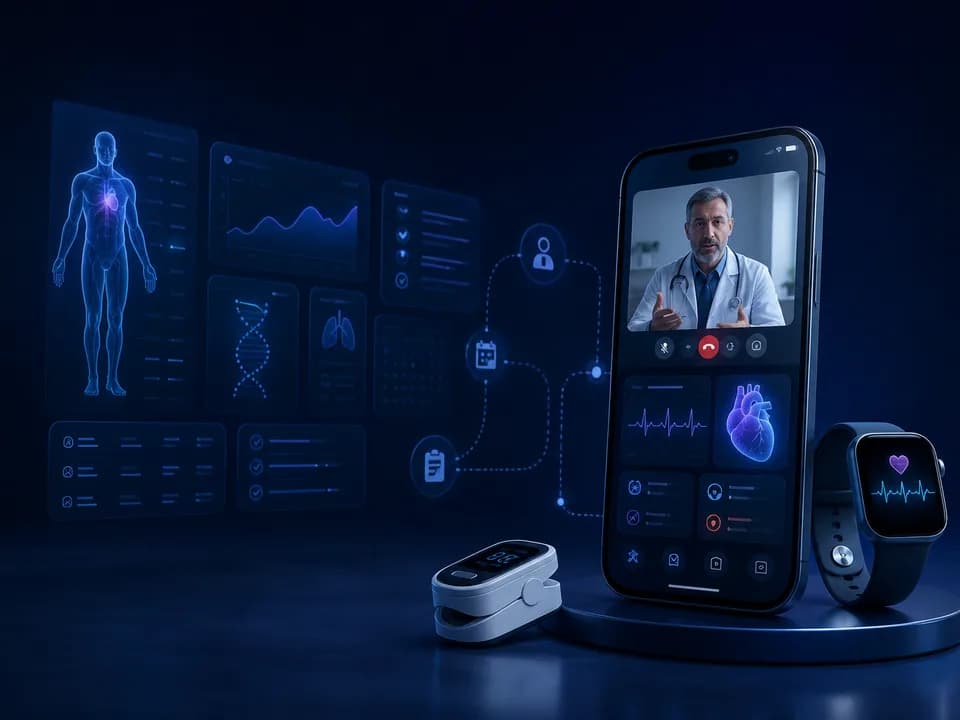
Healthcare Mobile App Development is the product-design, software-engineering and integration work required to provide patients, caregivers, clinicians or authorized administrators with carefully scoped mobile access to healthcare services and information. Depending on the approved product, an app may support registration, appointment management, digital intake, records and results, education, secure communication, payments, telehealth entry or remote-monitoring workflows. The exact intended use determines the safety, privacy, interoperability and regulatory work.
Skillonit's Healthcare Mobile App Development services can cover discovery, patient and staff research, service blueprints, Android and iOS UX, native or cross-platform engineering, identity and proxy access, consent controls, scheduling and intake, record presentation, secure messaging, notifications, content, EHR or FHIR integration, accessibility, localization, offline design, security, privacy, testing, store delivery and continuing operations. Telehealth, device connectivity, remote monitoring, decision support and other clinical functions are included only when explicitly scoped, governed and reviewed.
Software delivery is not medical practice. This page provides information about engineering a healthcare application; it does not give medical advice, diagnose a condition, recommend treatment, determine urgency or replace a licensed professional. The app should never instruct a patient to rely on a general digital workflow for an emergency. Emergency and urgent-care language, contact routes and response expectations must be supplied and reviewed by the accountable healthcare organization for each market.
The service does not promise improved health outcomes, diagnosis, adherence, reduced admission, patient satisfaction, regulatory clearance, HIPAA or GDPR compliance, interoperability certification, reimbursement, clinical acceptance or app-store approval. Those results require evidence and accountable organizations beyond software construction. Examples below are hypothetical requirement patterns, not Skillonit case studies. No patients, clinicians, hospitals, approvals, outcomes, certifications, offices or compliance status are invented.
Direct answer
A Healthcare Mobile App Development company helps a healthcare provider, digital-health organization or related service turn an approved patient or clinical workflow into a secure and accessible mobile product. The work normally includes clarifying intended use, mapping patient and staff journeys, defining identity and consent, connecting systems of record, preserving clinical meaning, implementing privacy and security controls, testing safety and accessibility, preparing release evidence, and maintaining the software as systems and requirements change.
The intended use is the first architectural input. An app that displays appointment details and reviewed education has a different risk from software that interprets a sensor, prioritizes symptoms or recommends a treatment. Regulators may evaluate device software functions according to their function and risk rather than the fact that they run on a phone. Qualified regulatory and clinical owners must determine classification, evidence, quality-system and approval obligations before development commitments are made.
The application should represent state precisely. “Result available” is not “result normal.” “Message sent” is not “clinician reviewed.” “Appointment requested” is not “appointment confirmed.” “Device reading received” is not “clinically validated.” The authoritative clinical or operational system owns these states, and visible language is reviewed by healthcare professionals.
A credible proposal needs the intended users and markets, clinical and administrative purpose, care setting, patient ages and access needs, accountable provider, source systems, identity and proxy model, data types, messaging expectations, urgency boundaries, accessibility, languages, medical-device or clinical-decision implications, integrations, existing code, release accounts and indicative investment.
Business problems and suitability
Patients often face fragmented service journeys: one number for scheduling, paper intake at arrival, a separate portal for results, email for documents and unclear routes for questions. Staff may manually re-enter information or answer repeated administrative queries. A healthcare app can create a coherent mobile channel when authoritative systems, policies and operational owners are ready.
The product is suitable for recurring relationships in which mobile access provides genuine value: ongoing clinic care, hospital services, diagnostic administration, therapy scheduling, health-plan member service, pharmacy administration, care-program education or connected monitoring under governance. A responsive portal may be more appropriate for occasional access or when an institution already provides a capable solution.
The app should distinguish administrative convenience from clinical care. Rescheduling an eligible visit and updating a contact preference may be routine. Interpreting a symptom, changing medication or deciding whether a patient requires urgent care is clinical. A software team must not broaden an administrative app into unreviewed diagnosis or treatment through marketing text or a chatbot.
Data readiness matters. Integrating an EHR does not automatically produce complete, current or patient-friendly information. Multiple patient identifiers, duplicate records, local codes, delayed feeds and document-only data require mapping and reconciliation. The app should explain source and freshness rather than conceal uncertainty.
Healthcare access varies by language, disability, digital confidence, connectivity, caregiver support and device ownership. A mobile app cannot become the only safe route unless the organization has approved alternatives. Authentication and anti-fraud controls must have an accessible recovery path that does not expose sensitive information.
An operating model is essential. Appointment exceptions, corrected records, concerning messages, device alerts, result release, consent, proxy disputes and complaints need real queues and accountable roles. An app that accepts a clinical-looking submission without a monitored process can create dangerous expectations.
Healthcare mobile app use cases
The following scenarios are illustrative only. They do not describe Skillonit clients, delivered projects or expected clinical outcomes.
Patient access and appointment app
A provider app may allow patient registration, identity linking, provider or service search, eligibility-aware appointment requests, rescheduling, cancellation, reminders, directions and preparation instructions. The scheduling system confirms availability. The app explains whether an action is booked, wait-listed or awaiting staff review.
Preparation content is linked to appointment type and reviewed by the care organization. It should not infer a diagnosis. Cancellation fees, referral needs and arrival rules come from approved systems and policy. Urgent symptoms route to reviewed emergency or clinical-contact information rather than the ordinary booking queue.
Digital intake and forms
A patient may complete demographics, contact, insurance or payment details, history questionnaires, consent and documents before arrival. Each question has purpose, owner and visibility. The app can save a draft and validate required fields without interpreting answers clinically unless a separately governed rule exists.
High-risk answers should not disappear into an unmonitored inbox. If a form is not reviewed before the visit, the app should say so. Consent signatures need version, identity, time and appropriate evidence, while the healthcare organization determines legal validity.
Records, results and care information
A patient app can present visit summaries, medication and allergy lists, immunizations, reports, test results, care plans and documents made available by the source organization. Patient-friendly labels can supplement, but not alter, clinical meaning. Units, reference ranges, status, source, author and date need accurate mapping.
Result release policies vary. Some results may appear immediately, others after review under approved rules. The app must not label a result safe or abnormal using an unreviewed client calculation. It can provide reviewed education and a contact path without giving medical advice.
Secure patient communication
A patient may choose a topic, recipient or care team, attach permitted material and send a secure non-emergency message. The interface states expected use, monitored hours and response process using verified organization information. It should not imply continuous monitoring when none exists.
Messages have delivery, routing, read and response states with caution: a technical read event does not prove clinical assessment. Attachments are validated and protected. Emergency language is visible before submission and supplied by the provider for the market.
Caregiver and family access
A parent, guardian, caregiver or authorized representative may receive scoped proxy access. The relationship can cover selected records, appointments, payments or messages and may change with age, consent, law or care context. A simple shared password is not an acceptable proxy model.
The patient should see and revoke access where applicable. Sensitive services may have different proxy rules. The system needs a process for disputed authority, dependent transitions and deceased patients under the accountable organization's policy.
Clinician or field workflow companion
A clinician-facing app may provide schedule, patient context, secure tasks, approved documentation or communication. It should minimize distraction and data exposure. Mobile access can complement, not casually replace, the authoritative clinical system and review processes.
Offline field workflows require careful record matching, synchronization and conflict handling. Decision support, prescribing, diagnostic image interpretation and other high-impact functions are out of a generic scope unless separately classified, validated and approved.
Patient, clinician, caregiver and administrator journeys
Patient onboarding explains the service, responsible organization, available tasks, privacy, accessibility, support and urgent-care boundaries. It collects only information needed for the first useful action. A wellness-style welcome must not obscure that the product belongs to, or integrates with, a healthcare provider.
The patient home view can show upcoming visits, requested actions, new documents, messages and education without exposing sensitive detail on a shared screen. Notifications and widgets need privacy-safe defaults. A user can hide specific categories or require device re-entry where supported.
Clinician journeys should be developed with clinical owners and observed workflow. A mobile shortcut that duplicates an EHR inbox can create alert burden rather than value. Tasks need priority, source, patient context, deadline, completion evidence and a safe handoff to the full record.
Caregiver journeys use proxy authorization, not assumptions based on surname or contact address. The caregiver chooses the patient context and sees the granted scope. Actions clearly state whether performed for self or another person. Notifications avoid exposing the dependent's sensitive data.
Administrators may manage content, scheduling configuration, roles, integration status and support. Clinical content publication and patient-record access are separate privileges. An administrator who edits a help article should not automatically browse results.
Support staff need restricted tools for account and technical issues. They should not see clinical detail unless the task and policy require it. Identity recovery is governed, logged and resistant to social engineering. Staff never request passwords or one-time codes.
Every journey includes an exception route. Duplicate identity, lost access, disputed proxy, wrong patient data, cancelled visit, delayed result, unanswered message and technical failure go to an accountable process. The app states what has and has not been received.
Registration, identity, consent and proxy access
Registration may create a digital account, link an existing patient record or both. Patient matching is safety-sensitive. Name and date of birth can be insufficient and should not be treated as proof. The healthcare organization determines which identifiers, invitations or proofing methods are appropriate.
Authentication can use passkeys, multifactor, federated identity or provider-supported credentials. OAuth 2.0 and OpenID Connect can support secure authorization flows. Tokens remain in platform-protected storage and have revocable lifecycles. Biometrics may unlock a protected session but do not replace server identity and authorization.
Authorization evaluates the person, patient context, role, relationship, facility, data category, purpose and current consent or policy. Every record API enforces object-level access. Predictable identifiers and hidden screens are not controls.
Consent is not one generic checkbox. Treatment, records access, research, marketing, telehealth, recording, device data and proxy sharing may have different legal bases and workflows. The system can capture an approved consent record with version and time; qualified owners determine what consent means and whether it is required.
Proxy access has subject, representative, scope, start, expiry, evidence and revocation. Adolescents, dependent adults and sensitive services require particular review. A caregiver's legitimate role in one area does not necessarily grant all records or messaging.
Account recovery needs accessible alternatives and resistance to takeover. It should not reveal that a person is a patient more broadly than intended. Recovery may involve provider staff under a controlled process. A changed phone number should not silently transfer access to the holder of the new number.
Session management can show active devices, last use and revocation. Sensitive actions may need fresh authentication. Sign-out and account switching clear local records and downloads appropriately, especially on shared devices.
Scheduling, intake and administrative service
Appointment search should use approved provider, service, location, modality, eligibility and referral data. The app must not infer clinical suitability from keywords unless an accountable clinical triage system has been explicitly scoped. A search result is an administrative option, not medical advice.
Availability can change concurrently. A slot may be held temporarily during confirmation, then booked only when the scheduling system accepts it. The UI distinguishes requested, pending, confirmed, wait-listed, rescheduled and cancelled. Calendar export is convenience; the source record remains authoritative.
Digital intake can adapt by service and patient, but branching rules need clinical and operational review. The app does not hide questions solely to shorten completion when they are required for safe care. Conversely, it avoids collecting broad history irrelevant to the encounter.
Forms preserve version, author, response, signature and submission state. A locally saved draft is not visible to clinicians until submitted and accepted. The app communicates whether staff will review answers before the visit. Concerning responses have a real escalation route if the workflow claims one.
Insurance, payer, payment and referral data are administrative domains with market-specific requirements. Images of cards or documents use secure upload and retention. Eligibility checks and estimates are labelled; they are not guarantees of coverage or final cost.
Check-in workflows may use location, QR, kiosk or manual confirmation only when the service actually supports them. Device location is optional unless essential, and it should not imply that staff know a patient arrived without authoritative confirmation.
Records, results, medication information and education
Record presentation requires a source-of-truth and semantic map. A medication list may contain active, historical, reported or prescribed entries. An allergy may be patient-reported or clinician-verified. The app preserves status and provenance rather than flattening everything into a simple list.
Laboratory and diagnostic results can include test name, value, unit, reference information, status, collection, report, organization and explanatory material. Reference ranges can vary by laboratory and patient context. The mobile client must not calculate or interpret significance without an approved, validated function.
Clinical documents may be PDFs, structured records or narrative. Accessible HTML or tagged documents are preferable where feasible. The patient should know whether a document is final, amended or preliminary. Corrections and patient-requested amendments follow the provider's process.
Medication features can display an approved list, instructions and refill-request path. They should not recommend starting, stopping or changing medication. A refill request is not a prescription or approval. Drug interaction and dose calculation functions are excluded unless separately governed and validated.
Patient education is linked to reviewed sources, care context, audience and update date. Content states its purpose and limitations. General education does not become personalized advice because the patient's name appears above it. High-impact content needs clinical authorship and review.
Search and browse must respect authorization and clinical context. A patient can find their documents and reviewed education without exposing other records in autocomplete. Search analytics should not send sensitive queries to unapproved services.
Secure messaging, notifications and service boundaries
Secure messaging can connect a patient with an approved care team or administrative queue. Topics, recipients and routing reflect the provider's operating model. The app states what the channel is for, whether it is monitored, and verified response expectations. It should not encourage emergency use.
Messages can be structured to gather useful context, but free text remains necessary when categories do not fit. The app avoids automated diagnosis based on message content. A classifier may route or prioritize under a governed process, with human correction and monitoring.
Delivery and read receipts are technical states. They do not prove a clinician assessed the message or accepted responsibility. A clinical response should be attributed to the accountable person or team. Automated acknowledgements identify themselves.
Notifications can cover appointments, forms, documents, messages and account security. Locked-screen previews default to minimal detail. A delayed notification retrieves current authorization before opening. Marketing is not disguised as a clinical or administrative alert.
Deep links restore the intended patient context after authentication and recheck authorization. A proxy who loses access cannot open a historical notification. Notification tokens are device-channel identifiers, not patient identity.
If chatbots or generative systems are considered, their scope should remain bounded to approved navigation or information unless clinical governance and regulatory review establish more. They must not impersonate a clinician, invent an answer or hide a human route.
Telehealth and remote monitoring boundaries
Telehealth may include appointment entry, identity, consent, waiting room, device check, video visit, secure chat, document exchange and follow-up. The provider determines patient location, clinician licensure, consent, emergency process, documentation and reimbursement requirements. Software cannot authorize care across jurisdictions.
The app should make clear when a patient is in a waiting room, connected or disconnected. Camera and microphone remain under user control. A failed video visit needs an alternate verified route. Recording is off unless explicitly approved, disclosed and governed.
Remote monitoring can collect data from connected devices or patient entry, transmit readings, display history and route events. Device, unit, timestamp, source, measurement context and quality matter. A reading received from a consumer device is not automatically clinically valid.
Alert thresholds, priority, recipient, monitored hours, acknowledgement and escalation require clinical governance. The app must not imply continuous monitoring when none exists. A push notification alone is not an alert-delivery guarantee. High-risk monitoring may fall within medical-device or other regulated scope.
Connected-device integration includes pairing, permissions, calibration or device status, duplicate readings, clock drift, offline buffer and attribution. The software should never silently combine readings from two people sharing a device. Manual correction and provenance are preserved.
Clinical decision support, diagnosis, dosage, waveform analysis and device control are outside a generic healthcare app scope. If intended, each software function needs classification, risk management, clinical evidence, quality and regulatory review appropriate to the market.
Interoperability and FHIR boundaries
FHIR is an HL7 standard for electronic healthcare information exchange using resources, references, profiles and implementation guides. It can support patient, appointment, encounter, observation, diagnostic report, medication, care plan, consent, communication and other data. Saying “FHIR integration” is not enough to define a working interface.
The project must identify the FHIR release, server, implementation guide, profiles, terminology, search capabilities, operations, authentication and conformance statements used by the source ecosystem. Different systems may support different subsets and extensions. A resource that is syntactically valid may still not represent the intended clinical meaning.
SMART on FHIR can support app authorization against participating health systems using OAuth-based patterns and defined launch context. The actual scopes, patient or user context, refresh behavior and server policy need testing. Access granted by a FHIR server does not eliminate mobile authorization and privacy design.
Legacy HL7 v2 messages, CDA documents, proprietary APIs and batch feeds may coexist. An integration layer can normalize contracts, but it cannot invent missing semantics. DICOM and diagnostic imaging require specialized handling; a thumbnail or PDF is not equivalent to a diagnostic viewer.
Terminology mapping covers codes, value sets, units and display names. Local codes should not be translated by a developer's guess. Clinical informatics owners review mappings. Provenance should identify source and transformations.
Write-back is riskier than read-only display. Creating an appointment request differs from authoring a clinical observation or note. Validation, identity, version, conflict, audit and reconciliation are defined per resource and workflow. The app should not overwrite a more recent clinician update during offline sync.
Interoperability testing includes realistic patient identities, duplicate and merged records, amended results, cancelled appointments, missing fields, unknown codes and access revocation. Certification claims are made only if the exact product has completed the applicable program and evidence.
Offline behavior and synchronization
Offline capability is defined by data and safety. Reviewed education, upcoming appointment basics, form drafts and selected documents may be cacheable. Current results, messages, medication changes, available slots and alert workflows may require live confirmation. The app identifies stale state and last refresh.
Sensitive cached data uses platform-protected storage, minimal retention and account-specific encryption where justified. Shared-device, backup, screenshot, clipboard and notification exposure are reviewed. Sign-out and proxy revocation clean local data promptly.
Draft intake and messages can be saved locally, but their status remains “on this device” until accepted. Queued requests carry stable identifiers so retries do not create duplicate forms or appointments. A message that failed to upload must not appear sent.
Synchronization uses server-authoritative clinical records. Conflicts are not resolved with a generic last-write-wins rule where safety is affected. A patient contact preference may merge differently from a clinical questionnaire or medication record. The responsible system and human review decide.
Connected devices may buffer readings offline. The sync process preserves device timestamp, receipt timestamp, unit, source and duplicate status. Late data should not be represented as a new current alert without the approved rule.
Offline tests include device clock changes, account switch, proxy revocation, low storage, app termination, partial downloads and connectivity transitions. Recovery should avoid losing patient-entered data while never implying that a care team saw it before transmission.
Integrations and data flows
An integration inventory identifies each data object, system of record, direction, frequency, identity, authorization, classification, retention, failure and owner. Common systems include EHR or EMR, scheduling, patient administration, laboratory, imaging, pharmacy, billing, identity, telehealth, remote-monitoring and content management.
EHR integration can provide records, results, care team, messages and documentation under approved APIs. The app should not duplicate the full EHR data model without need. Read and write responsibilities are explicit. A mobile cache is not the longitudinal record.
Scheduling integrations manage providers, services, locations, slots, appointment state and wait lists. Concurrency and eligibility are enforced by the scheduling source. Calendar exports and reminders are downstream conveniences.
Laboratory or diagnostic integrations provide orders and results through the clinical ecosystem. Release status, corrections and provenance must propagate. A preliminary result is not silently converted to final by the mobile adapter.
Billing and payment systems can present estimates, invoices, payments and receipts. Financial and clinical records remain separated appropriately. A payment-provider callback is reconciled by trusted backend services rather than a client response.
Telehealth providers can supply waiting rooms and media. Identity, consent, clinician assignment, privacy, recording and encounter documentation remain part of the care organization. Video Calling App Development covers underlying communication architecture beyond the clinical workflow.
Remote-device platforms can provide readings and device metadata. Integration contracts define unit, timestamp, patient-device association, validation, alerting and error. The app does not promise medical-device compatibility without tested evidence.
Content management delivers reviewed education, instructions, consent and support text by market and language. Clinical approval and expiry are publication gates. Search indexes only current authorized content.
Analytics and crash tools need health-data review. Patient identifiers, clinical queries, results, message text, tokens and form answers should not flow to general analytics by default. SDK data collection and onward sharing must match the approved data map.
Architecture and technology choices
A typical solution includes Android and iOS clients, an API gateway, mobile backend-for-frontend, identity and consent, patient-context authorization, scheduling, communication, content, notification, interoperability adapters, audit, event processing, encrypted storage and observability. Clinical systems remain authoritative.
The backend-for-frontend can aggregate mobile-safe views and reduce chatty calls. It should preserve provenance and source status. It must not become an unreviewed clinical rules engine. Every derived field has an owner and explanation.
Relational data can support account, consent, proxy, appointment and workflow integrity. Documents and media use controlled object storage. Search indexes approved, authorized data. Caches are patient- and viewer-aware. Events distribute appointment, result, message and revocation state with idempotency and ordering rules.
APIs define schema, authorization, validation, versioning, idempotency and errors. High-impact writes use concurrency controls and receipts. Correlation identifiers support audit from mobile action through integration response without placing sensitive payloads into every log.
Native Android and iOS offer deep platform and health-device integration. Flutter or React Native can share product code where requirements fit. Device connectivity, accessibility, offline, secure storage, existing team and maintenance determine the choice. Native Mobile App Development and Cross Platform App Development provide related comparisons.
Environment separation includes synthetic or approved de-identified test data where possible. Production patient data should not be copied casually into development. Secrets, signing and privileged integration credentials remain in controlled services.
Feature flags may stage administrative functions but must not bypass clinical validation or medical-device change control. Flags have owners and audit. A kill switch can disable a risky workflow while preserving access to safe information.
Security, privacy, retention and audit
Threat modelling covers account takeover, patient-record mismatch, broken authorization, proxy abuse, message disclosure, malicious uploads, API abuse, insider access, ransomware, dependency compromise, device loss and unsafe clinical-state representation.
Server authorization checks actor, patient, relationship, organization, role, purpose, record class and action. Least privilege applies to patients, proxies, clinicians, support, administrators and service accounts. Emergency “break glass” access, if required, belongs to provider policy and creates prominent audit and review.
Transport uses current secure protocols. Sensitive local data and credentials use platform protections. Secrets never ship in the app. Logs, traces and crash reports redact tokens, identifiers, clinical content and attachments unless an approved, access-controlled purpose exists.
Data minimization inventories every field and event: purpose, source, recipients, location, retention and deletion. Health data can fall under different regimes depending on who operates the app and why. The HHS guidance, for example, notes that HIPAA applicability depends on covered-entity and business-associate context; an app is not automatically HIPAA covered simply because it handles health information.
No page or proposal should claim “HIPAA compliant” or “GDPR compliant” based on encryption or hosting alone. Organizational agreements, policies, risk analysis, access, training, incident handling, individual rights and actual operations matter. Qualified privacy and legal review is required for the specific markets.
Retention distinguishes account, clinical records, messages, forms, recordings, device readings, consent, audit, analytics and support. The provider determines record obligations. Account deletion does not automatically authorize deletion of the healthcare record. The app explains what request was made and who decides it.
Audit records include actor, patient context, operation, result, time, source and correlation. They are protected against unauthorized change and reviewed. Audit access itself is controlled. Ordinary product analytics cannot replace clinical audit.
Secure development includes dependency and SDK assessment, secret scanning, static and dynamic tests, API security, mobile security review, protected build and signing, vulnerability response, backups and incident exercises. Controls must be validated; listing them is not certification.
Safety and clinical governance boundaries
Clinical governance identifies the accountable medical, nursing, safety, informatics, regulatory and operational owners for every health-impacting feature. They approve intended use, content, rules, escalation, risk controls and change. Software engineers provide evidence and implementation; they do not assume clinical authority.
Risk analysis asks what harm can occur if data is wrong, late, missing, assigned to the wrong patient or misunderstood. Controls can include source labels, confirmation, independent review, limits, fallback and monitoring. Severity and likelihood are assessed by qualified stakeholders.
Alerts and reminders should not become hidden medical decisions. A missed reminder is not proof of non-adherence. A threshold alert requires a real recipient, schedule, acknowledgement and backup. The patient needs accurate instructions about what to do when the service is unavailable.
Clinical content has authorship, evidence, audience, version, approval and review date. Updating a backend rule can alter patient behavior and may require governance or regulatory review. Remote configuration must not circumvent controlled release.
Medical-device software boundaries are function-specific. FDA primary guidance explains that some software functions may meet the device definition and that oversight focuses on function and risk. Other jurisdictions differ. A qualified regulatory assessment should occur early; the application must not advertise clearance or approval it does not possess.
Post-release governance reviews incidents, near misses, incorrect data, user confusion and changes. A product complaint related to safety is not treated as an ordinary backlog item. Escalation and evidence preservation are part of operations.
User experience, responsive design and accessibility
Healthcare UX should reduce cognitive and emotional burden. Plain language, predictable navigation and visible next steps matter when a user is anxious, fatigued, in pain or supporting another person. The interface should not use alarming color or language without clinical purpose.
Accessibility includes semantic structure, TalkBack and VoiceOver, text scaling, contrast, target size, keyboard or switch access where relevant, reduced motion, captions and accessible authentication. Forms provide explicit labels, instructions and error summaries. Timeouts offer warning and recovery appropriate to security.
Clinical values, tables and charts need text alternatives, units and dates. Colour is never the only indication of status. Results remain readable at high zoom. Documents should be tagged or have accessible HTML alternatives. Telehealth controls and captions require manual testing.
Shared-device privacy influences visible previews, recent-patient lists and screenshots. Proxy context is clearly marked. A user should not send a message or view a result under the wrong patient because the active profile is subtle.
Localization includes language, script, name, address, date, time, unit and care terminology. Medical translation requires qualified review, not generic machine output. Emergency and support routes are locally accurate. Units should not be converted without approved rules.
Usability testing includes patients of varied digital confidence, disabilities, language, age and connectivity, along with clinicians, caregivers and administrators. Testing uses safe representative data. Success includes comprehension and recovery, not only task completion.
Performance and Core Web Vitals
Mobile performance budgets can cover startup, time to appointment or record view, form response, message send, telehealth join, device sync, memory, battery and crash stability. Measurements use target devices and networks. Performance must not remove authorization or audit.
The app can display a safe cached shell and clearly dated low-risk information while live clinical state loads. Current result, medication, message and appointment actions require authoritative confirmation. Large documents and media use incremental or adaptive delivery.
Background device sync follows platform limits and clinical requirements. Aggressive polling can drain battery without guaranteeing monitoring. Push notification is not a substitute for server alert delivery and operational response.
Core Web Vitals apply to public service routes, patient web portals and educational pages rather than as native-app scores. Relevant web pages should monitor Largest Contentful Paint, Interaction to Next Paint and Cumulative Layout Shift under current guidance.
Observability correlates client, API, interoperability and provider state with privacy-safe identifiers. Dashboards can show error, latency, queue age and sync failure without revealing clinical content broadly.
Testing and device matrix
Testing covers registration, identity, proxy, appointment, intake, record, result, document, message, notification, payment, telehealth and monitoring states as applicable. Every journey includes loading, empty, stale, partial, failed, revoked, offline and recovery behavior.
Patient-safety testing uses traceable hazards and representative data. It verifies identity context, units, status, provenance, corrections, conflicts and failure language. Clinical owners validate meaning. A developer's test pass is not clinical validation.
Interoperability tests cover FHIR profiles or other contracts, unknown and local codes, missing fields, duplicate and merged patients, amended results, cancelled appointments, source downtime, version conflict and authorization. Write-back receives reconciliation evidence.
Security tests attempt object-level access across patients and proxies, token replay, enumeration, unsafe deep links, malicious documents, excessive requests and privileged misuse. Privacy tests inspect logs, analytics, notifications, screenshots, exports and account switching.
Telehealth tests cover permission, camera, microphone, audio route, poor network, reconnect, waiting-room state, captions and alternate contact. Remote-monitoring tests cover pairing, patient-device association, unit, clock drift, duplicates, late readings and alert delivery.
The device matrix follows patient and staff evidence: supported Android and iOS versions, screen sizes, low memory, secure storage, languages, text scaling, TalkBack, VoiceOver, switches or keyboards where applicable, cameras, Bluetooth devices, audio routes and variable networks. Physical devices validate lifecycle and accessibility.
Operational acceptance includes provider, privacy, security, clinical, support and regulatory owners as appropriate. Evidence can include intended use, risk decisions, test traceability, accessibility, data flow, audit, store disclosures, runbooks and release approval.
Discovery-to-launch delivery process
1. Intended-use and stakeholder discovery
The team defines users, healthcare setting, administrative and clinical purpose, markets, systems, data, accessibility, privacy and operations. Medical-device and clinical-decision questions are escalated early.
2. Service and safety blueprint
Patient, clinician, caregiver, administrator and support journeys are mapped to systems and human responsibilities. Urgency, exceptions, consent and failure states become requirements.
3. Accessible prototype
Prototypes test identity, scheduling, results, messaging and recovery with representative users and reviewed language. Accessibility and localization are included before visual detail hardens.
4. Integration and risk proof
The team validates the riskiest EHR, FHIR, identity, telehealth, device or offline requirement with a measurable proof. A proof is not regulatory or production approval.
5. Vertical-slice engineering
Work proceeds through complete journeys such as link record and book visit, or view result and contact care team. Each slice includes mobile, API, authorization, audit, accessibility and tests.
6. Assurance and operational readiness
Security, privacy, interoperability, accessibility, performance, clinical-safety and device tests are completed proportionately. Staff have queues, support and incident runbooks.
7. Controlled release
Internal, pilot or staged distribution validates real systems and operations. High-risk capabilities remain disabled until evidence and approvals are complete. Store approval is not guaranteed.
8. Governed evolution
The team reviews incidents, incorrect state, accessibility feedback, operational workload and system changes. Clinical or regulated functions follow approved change control.
Deployment, signing and store releases
Development, testing and production environments separate access and data. Test environments use synthetic or appropriately governed data. CI/CD creates reproducible builds, tests and scans them, protects secrets, signs approved artifacts and preserves provenance.
Identity, APIs, telehealth, devices, notification, payment and analytics are configured per environment. Production credentials and signing remain under authorized organizational control. Debug screens, permissive roles and real patient test accounts must not enter public builds.
Store listings accurately describe health functions, organization, data, purchases and user-generated content. Privacy and data-safety disclosures include SDK and backend collection. Account deletion, support and subscription behavior are reviewed against current store rules. No approval is guaranteed.
Older clients require compatible APIs. A safety or security issue may require server disablement and mandatory update, with an accessible explanation. Release monitoring covers identity, records, messaging, scheduling and provider failures.
Rollback must preserve record integrity. A mobile binary may remain installed, so server compatibility and kill switches matter. Clinical and support owners receive release notes and known limitations.
Migration and modernization
Migration inventories app identity, accounts, patient links, proxies, appointments, forms, messages, records, documents, consents, devices, payments, notifications, analytics, signing and deep links. Healthcare organizations confirm ownership and retention.
Identity and patient matching are migrated with reconciliation. Duplicate and merged records, changed identifiers and proxy relationships require review. A technical import should not create a second patient record silently.
Clinical data mapping preserves source, code, unit, status, version and provenance. Documents remain linked to the correct encounter or patient. Sample and aggregate reconciliation is reviewed by informatics owners.
An incremental approach can place a new mobile layer over existing EHR or portal interfaces, then replace adapters. Dual writes need conflict and reconciliation. Store identity can be retained when the organization owns the correct accounts and signing.
Messages, consents, audit and remote-device history have distinct migration and retention. In some cases, a secure read-only archive is safer than transformation. Patients receive accurate communication about history and required reverification.
Timeline factors
Timeline depends on intended use, patient and staff roles, platforms, identity and proxy, data sensitivity, scheduling, intake, records, messaging, telehealth, devices, interoperability, languages, accessibility, regulatory assessment, migration, testing and institutional access.
An administrative appointment app over a mature portal differs from a multi-provider product with clinical results, secure messaging, telehealth and remote monitoring. EHR sandboxes, provider contracting, clinical content and regulatory decisions can be the critical path.
Milestones use evidence: correct patient link, authorized proxy, confirmed appointment, accurate result mapping, routed message, audited access and safe failure. Discovery provides ranges and dependencies; a fixed date without system access is not responsible.
Cost factors
Cost follows product and clinical discovery, UX, mobile and backend engineering, identity, interoperability, secure messaging, telehealth or device providers, migration, security, privacy, accessibility, localization, testing, store delivery and maintenance.
Healthcare systems can require vendor fees, integration environments, terminology mapping and specialist review. Telehealth, monitoring, support, clinical governance, quality and regulatory work add continuing responsibility. A feature count is not a risk-adjusted budget.
Native and cross-platform approaches have tradeoffs, but neither removes platform, accessibility or assurance work. Existing EHR APIs reduce cost only when suitable, licensed, documented and available. No universal fixed price appears here.
A proposal separates one-time delivery, providers, healthcare-organization responsibilities, specialist assurance, contingency, operations and maintenance. Estimate confidence increases after intended use and source systems are reviewed.
Risks and mitigations
Wrong-patient risk: information or action is attached to another patient. Mitigation includes governed matching, visible patient context, server authorization, reconciliation and audit.
Clinical-misinterpretation risk: mobile language changes the meaning of a result or instruction. Mitigation includes provenance, reviewed terminology, units, status, content governance and safety testing.
Unmonitored-channel risk: a patient expects a clinical response from an unattended message or alert. Mitigation includes verified boundaries, queues, operating ownership, acknowledgement and escalation.
Proxy-overreach risk: a representative sees data outside authority. Mitigation includes scoped proxy records, lifecycle, sensitive-service rules, revocation and negative testing.
Regulatory-scope risk: a feature becomes device or decision software without review. Mitigation includes early intended-use analysis, qualified classification and controlled change.
Privacy risk: SDK, logs or notifications expose sensitive health data. Mitigation includes minimization, SDK review, redaction, safe previews and approved data maps.
Interoperability risk: syntactically valid data loses clinical semantics. Mitigation includes profiles, terminology, provenance, informatics review and realistic conformance testing.
Offline-conflict risk: stale mobile data overwrites a current clinical record. Mitigation includes server authority, versions, domain-specific conflict handling and human review.
Accessibility risk: a patient cannot reach a critical service. Mitigation includes inclusive design, manual assistive testing, accessible recovery and alternate channels.
Provider-dependency risk: EHR, telehealth or device outage blocks care access. Mitigation includes degraded state, operational fallback, observability, contracts and incident communication.
Maintenance, observability and support
Maintenance includes OS and device compatibility, dependencies, EHR interfaces, FHIR profiles, terminology, clinical content, provider SDKs, store policy, vulnerabilities, accessibility, privacy and retention. Healthcare requirements and workflows evolve.
Observability spans client, identity, patient context, scheduling, messaging, interoperability and providers with privacy-safe correlation. Alerts identify failed or delayed workflows without exposing patient data broadly. Audit and operational telemetry remain distinct.
Support routes technical, account, appointment, billing, record correction, clinical question and urgent concern to different owners. Software support does not give medical advice. Staff use approved tools and never request passwords or one-time codes.
Incident response covers security, privacy, incorrect data, delayed messages and safety concerns. Clinical or regulatory owners determine required action. Evidence and communications are preserved. Near misses matter even when no harm is confirmed.
Periodic reviews remove stale access, flags, SDKs, caches and unsupported clients. Clinical content and workflows are reapproved. Accessibility is retested. Provider and integration changes receive regression and risk review.
Decision criteria and comparisons
Healthcare app versus patient portal
A mobile app fits frequent access, notifications, camera or device use, offline drafts and secure re-entry. A portal avoids installation and may already integrate deeply with an EHR. A focused app can use portal services without replacing the record system.
Healthcare app versus wellness app
A wellness app may provide general education or self-tracking outside a provider relationship. A healthcare app can connect to care services and records. Intended use, claims, operator and data flows—not design style—determine obligations.
Administrative app versus medical-device software
Administrative functions schedule and communicate approved information. Device software may diagnose, treat, monitor or control according to its intended function. Qualified regulatory owners must classify each function; the developer should not assume status.
Telehealth versus secure messaging
Telehealth supports a scheduled synchronous clinical encounter. Secure messaging supports asynchronous communication under monitored boundaries. Each requires identity, consent, documentation and escalation appropriate to the provider.
Native versus cross-platform mobile development
Native fits deep device or health-platform integration. Flutter or React Native can share product code. Connected devices, media, accessibility, security, team and maintenance determine the choice.
FHIR integration versus proprietary API
FHIR offers standardized resources and implementation patterns, but each ecosystem supports profiles and versions. Proprietary APIs may expose needed workflows. Selection follows source capability, semantics, licensing and conformance, not a label.
Technical SEO and AI-search readiness
This national/global authority page uses the exact catalogue identity, unique title, description and H1, self canonical path, direct definitions, healthcare entities, limitations, comparisons, FAQs, internal links and authoritative source notes. It remains noindex,follow and outside sitemaps until human editorial, medical-claims and technical release gates pass.
Organization, WebSite, BreadcrumbList and Service schema may describe only verified visible content. FAQPage semantics, if used, match visible questions. Review, AggregateRating, patients, clinicians, outcomes, approvals, HIPAA or GDPR status, certifications, clients, prices and offices are not invented.
The route should provide crawlable HTML, logical headings, descriptive links, accessible mobile-first rendering and measured Core Web Vitals. Alt text describes the real image, such as “patient appointment, results and secure messaging flow connected to an EHR,” rather than keyword repetition.
AI-search usefulness comes from extractable definitions, careful administrative-versus-clinical boundaries, interoperability relationships, facts versus recommendations, direct FAQs and sources. None guarantee ranking, citation, traffic or leads.
Country and city routes default to contentStatus: editorial_review, robots: noindex,follow and sitemapEligible: false. Indexation requires verified delivery and demand, original local healthcare and buyer context, accurate language, currency, timezone and support model, locally reviewed privacy, medical-device and procurement considerations, unique FAQs, conversion, similarity approval and human review.
No route may imply a local office, clinician, hospital relationship, regulatory approval, certification, patient outcome or legal expertise without evidence. Hreflang connects only complete reviewed translations. Place-name substitution is prohibited.
Frequently asked questions
What is Healthcare Mobile App Development?
It is the design, engineering, integration, release and maintenance of mobile software for carefully scoped healthcare administrative, patient-access or clinical-support workflows under accountable privacy, safety and operational governance.
Does a healthcare app provide medical advice?
Not by default. This development service does not diagnose, recommend treatment or replace a clinician. Any decision or device function requires separate intended-use, clinical, regulatory and evidence review.
What features can a patient app include?
It may include registration, appointments, forms, approved records and results, education, messages, notifications, payments, telehealth entry and proxy access. Exact functions depend on provider policy and systems.
Can the app integrate with an EHR or EMR?
Yes, through supported FHIR, HL7 or proprietary interfaces. The project must define versions, profiles, terminology, authorization, provenance, write-back and reconciliation. Integration does not guarantee complete data.
What is FHIR?
FHIR is an HL7 standard for exchanging healthcare information electronically using resources and implementation patterns. Real projects still need profiles, implementation guides, terminology, authentication and conformance testing.
Can SMART on FHIR be used?
It can be used when the participating ecosystem supports the needed launch, scopes and version. Authorization and patient context must be tested. SMART support does not remove mobile privacy or safety work.
Can patients book appointments?
Yes. The app can search approved availability and request, reschedule or cancel eligible visits. The appointment is confirmed only when the scheduling system accepts it.
Can test results be shown?
Yes, under provider release rules. The app should preserve source, unit, status, date and provenance and avoid unreviewed interpretation or reassurance.
Can patients message clinicians?
Yes, if the provider has a monitored secure workflow. The app must state intended use, operating boundaries and urgent-care alternatives. A sent or read message is not proof of clinical assessment.
Can caregivers access patient information?
Yes, through a governed proxy model with scope, evidence, start, expiry and revocation. Rules vary by patient age, service and market. Shared credentials are not appropriate proxy access.
Can telehealth be included?
Yes, with provider-approved identity, consent, waiting room, video, documentation, accessibility and emergency workflow. Clinician location and licensure questions require qualified organizational review.
Can remote patient monitoring be included?
Yes, when device, intended use, measurement, clinical monitoring, alert response and regulatory scope are defined. The app must not imply continuous monitoring or validated accuracy without evidence.
Is the app automatically a medical device?
No; status depends on intended software functions and jurisdiction. Some functions may fall outside device definitions, while others can be regulated. Qualified regulatory assessment is needed.
Can Skillonit guarantee HIPAA compliance?
No. HIPAA applicability and compliance depend on the organizations, data, agreements, safeguards and operations. Engineering can implement controls, but a blanket compliance claim is not responsible.
Can GDPR compliance be guaranteed?
No. GDPR and other privacy obligations depend on actual roles, purposes, markets, rights, transfers and operations. Qualified legal and privacy review is required.
How is health data protected?
Controls can include data minimization, server authorization, encryption, protected credentials, redacted logs, least privilege, audit, secure development and incident response. The exact control set follows risk and applicable obligations.
Can the app work offline?
Selected education, appointment context and drafts may work offline. Current records, results, messaging, scheduling and alerts may require live confirmation. Stale and pending states remain clear.
How is accessibility handled?
Core journeys are designed and manually tested for semantics, VoiceOver, TalkBack, text scaling, contrast, focus, captions, accessible forms and recovery. Medical documents and charts also need accessible presentation.
Which mobile technology is best?
Native Android and iOS, Flutter and React Native can all fit. Connected devices, offline, media, accessibility, security, existing team and long-term maintenance determine the choice.
How long does development take?
Timeline depends on intended use, roles, EHR and provider access, data, telehealth or devices, privacy, accessibility, regulatory assessment, migration and assurance. A credible estimate follows discovery.
How much does a healthcare mobile app cost?
Cost includes product and clinical discovery, engineering, integrations, providers, migration, security, privacy, accessibility, testing, release and maintenance. No universal fixed price is credible.
Can an existing patient portal or app be migrated?
Yes, when identity, patient matching, records, proxy, consent, messages, integrations, store assets and retention are mapped and reconciled with healthcare owners.
Can country and city healthcare-development pages be created?
Routes and localized inputs can be prepared, but every location route remains noindex until it contains verified substantial local value and passes medical-claims, location-quality, similarity, technical and human review.
What information is needed for a proposal?
Provide intended users and use, healthcare organization, markets, workflows, systems, identity and proxy, data types, telehealth or devices, clinical and regulatory owners, languages, accessibility, current code, release window and indicative investment.
International and location delivery gate
This global page describes engineering services without claiming a healthcare office, licensed clinician, provider relationship or regulatory approval in a location. Geographic data supports route planning, not automatic publication. Default location status is editorial review, noindex, follow and sitemap exclusion.
A location page can advance only when demand, actual delivery, relevant healthcare segments, language, currency, timezone, support, data-hosting and interoperability context, medical-device, privacy and procurement review, original FAQs and a real conversion route are verified. Claims need authoritative sources and accountable review.
Translations receive qualified healthcare review. Reciprocal hreflang applies only among complete approved equivalents. No hospital, clinician, patient, local office, clearance, certification or compliance capability is inferred from a city name.
Start a healthcare mobile app discussion
Share the intended users and healthcare purpose, accountable organization, countries, patient and staff journeys, identity and proxy model, scheduling, intake, records, results, messaging, telehealth or monitoring scope, EHR and FHIR environment, data types, privacy and regulatory owners, accessibility, languages, current code, desired release window and indicative investment.
Skillonit can use that context to separate administrative and clinical functions, map source systems and safety responsibilities, select a mobile architecture, plan interoperability and assurance, and prepare a phased Healthcare Mobile App Development proposal. An enquiry does not promise diagnosis, treatment, health outcomes, HIPAA or GDPR compliance, regulatory approval, certification, store approval or fixed delivery.
Related services
- Customer Self Service App Development for account, appointment, billing and support patterns outside clinical interpretation.
- Video Calling App Development for secure real-time communication infrastructure.
- Chat and Messaging App Development for asynchronous and real-time messaging systems.
- Fitness and Wellness App Development for non-clinical wellness experiences under clear boundaries.
- Native Mobile App Development for deep Android and iOS device integration.
- Cross Platform App Development when shared mobile code fits the use case.
- App Modernization and Migration for replacing an existing healthcare app while preserving governed records.
Editorial source notes
- U.S. Department of Health and Human Services, HIPAA Security Rule: https://www.hhs.gov/hipaa/for-professionals/security/index.html
- U.S. Department of Health and Human Services, Health information on personal mobile devices: https://www.hhs.gov/hipaa/for-professionals/privacy/guidance/cell-phone-hipaa/index.html
- U.S. Food and Drug Administration, Device Software Functions Including Mobile Medical Applications: https://www.fda.gov/medical-devices/digital-health-center-excellence/device-software-functions-including-mobile-medical-applications
- U.S. Food and Drug Administration, Policy for Device Software Functions and Mobile Medical Applications: https://www.fda.gov/regulatory-information/search-fda-guidance-documents/policy-device-software-functions-and-mobile-medical-applications
- U.S. Food and Drug Administration, How to Determine if Your Product Is a Medical Device: https://www.fda.gov/medical-devices/classify-your-medical-device/how-determine-if-your-product-medical-device
- HL7, FHIR Overview: https://hl7.org/fhir/overview.html
- HL7, FHIR Security and Privacy Module: https://hl7.org/fhir/secpriv-module.html
- HL7, SMART App Launch Implementation Guide: https://hl7.org/fhir/smart-app-launch/
- W3C, Web Content Accessibility Guidelines overview: https://www.w3.org/WAI/standards-guidelines/wcag/
- Apple, Human Interface Guidelines: https://developer.apple.com/design/human-interface-guidelines/
- Apple Developer, Accessibility: https://developer.apple.com/accessibility/
- Apple, App Review Guidelines: https://developer.apple.com/app-store/review/guidelines/
- Android Developers, Guide to app architecture: https://developer.android.com/topic/architecture
- Android Developers, Accessibility principles: https://developer.android.com/guide/topics/ui/accessibility/principles
- Google Play, Developer Program Policies: https://play.google/developer-content-policy/
- OWASP, Mobile Application Security: https://mas.owasp.org/
- OWASP, API Security Project: https://owasp.org/www-project-api-security/
- NIST, Privacy Framework: https://www.nist.gov/privacy-framework
- Google Search, SEO Starter Guide: https://developers.google.com/search/docs/fundamentals/seo-starter-guide
- Google Search, Structured Data Policies: https://developers.google.com/search/docs/appearance/structured-data/sd-policies
These primary and authoritative sources guide editorial and technical review; they do not certify Skillonit or any future product. Healthcare law, medical-device classification, clinical safety, privacy, interoperability, accessibility and store requirements must be reassessed by qualified owners for the actual intended use, operator, users, markets, integrations and release configuration.